Ancient wisdom for what to do next
Consult the I Ching, turn your reading into a concrete practice, and learn from Adam Bauer.
How the practice works
1Ask
Bring a real, open question — something you actually face, phrased so an answer could change what you do.
2Cast
Throw three coins six times to build a hexagram, line by line, from the bottom up. Some lines may be changing.
3Interpret
Read the hexagram and any changing lines. Sit with the image before you reach for a verdict.
4Commit
Translate the reading into one concrete next action — small enough to actually do this week.
5Review
Return to your notes later and record what changed. The practice compounds through review.
Wisdom for changing conditions
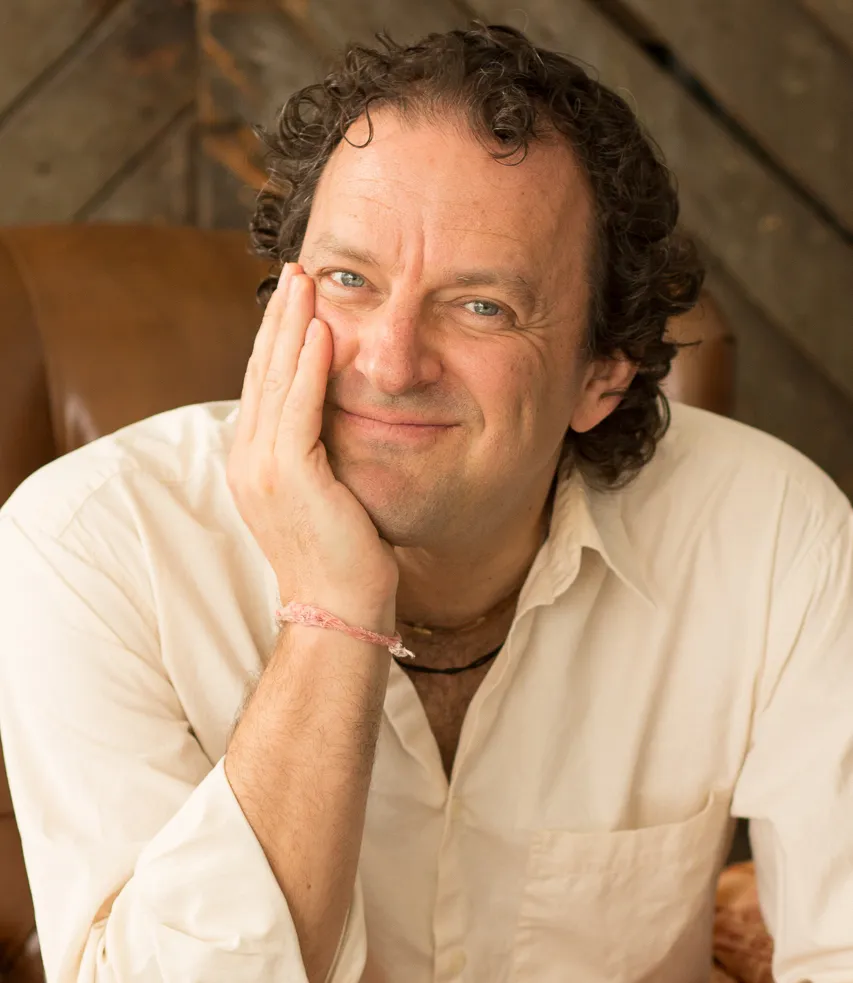
Study with Adam Bauer
Adam Bauer has practiced the I Ching for forty-five years and taught it for twenty-five. A kirtan musician and former bassist for Krishna Das, he brings a working teacher's patience to the Book of Changes — less fortune-telling, more a way of listening.
He offers private consultations and, from time to time, small retreats. His approach is the one this site is built around: ask a real question, cast, interpret, and commit to a concrete next step.
Learn more about Adam →If you already read tarot or astrology
The I Ching for tarot readers
A familiar move for anyone who reads cards: draw, interpret an image, and find the guidance inside it — with changing lines instead of reversals.
Read the bridge →The I Ching for astrologers
If you already read cycles and timing in a chart, the sixty-four hexagrams offer another language for the same turning of conditions.
Read the bridge →Retreat
Practicing the I Ching in Hawaiʻi
A week of casting, quiet, and kirtan with Adam Bauer — the five-step practice carried into a place made for slowing down.
Learn about the retreat →
The Book of Changes is at its most useful precisely when things are in motion — a decision half-made, a relationship shifting, a plan that no longer fits. It does not predict a fixed future. It reads the pattern of the moment and points to how it is already turning.
That is why the practice ends in action, not prophecy. When conditions are changing, the question worth asking is not "what will happen?" but "what is mine to do now?"